 |
The Sasse: Where love stories develop between art and viewer | ||||
|
|||||
The Passage |
|||||
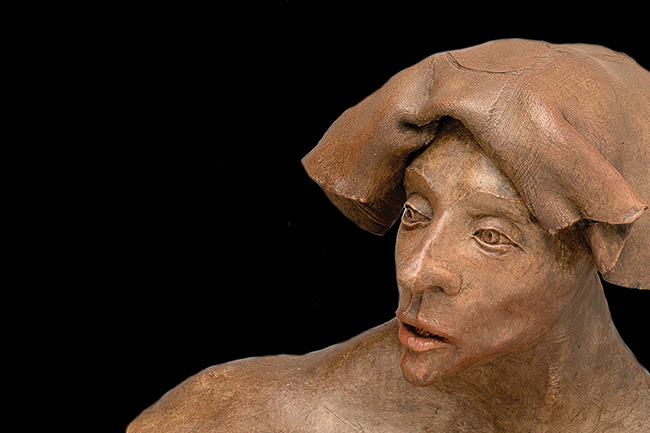
No one builds their own eyes. No one earns their hands. The capacity to be moved by a color, a phrase, a face across a room. This too arrives before we do. We use it without having made it. Every artist who has worked for any length of time knows a particular kind of surprise. You look at something you have just made and cannot quite account for it. The line was not planned. The image arrived whole. You were present, certainly. Your hand did the work. But the work is, in some way you cannot name, ahead of you. It knows more than you did when you began. What this is has been called many things. Inspiration. The muse. The Spirit. The subconscious. Grace. The names vary with the century and the temperament. What does not vary is the experience. Something arrives. It uses you. When it is gone, you are left with the work and the slightly uncomfortable knowledge that you were not entirely its author. This is not a diminishment. It is a clarification. The artist is not the source of the work. The artist is the place where the work passes through. Craft becomes the labor of clearing the passage. Attention becomes the labor of widening it. Humility becomes the labor of not narrowing it with the noise of the self. The ego wants authorship. It wants the story to be about the one who made. The work wants only to come through. These two wants are not usually compatible. A life in art is, in part, the long negotiation between them. What passes through does not require a name. Believer and skeptic can stand in the same studio and do the same work. One calls it God, another the unconscious, another nothing at all. The hands move the same way. The attention is the same attention. And then the work leaves the studio. Someone stops in front of it who did not make it, did not plan to find it, may not even have come looking. Something moves through them that they did not arrange for. What passed through the artist is passing through again. This is what a work of art is for. Not to be admired. Not to be explained. To be the place where two strangers, separated by years or oceans or languages, are briefly moved by the same thing. The maker is gone from the room. The viewer has just arrived. And still, something crosses between them. The work is the meeting. sculpture by: Larry White |
|||||
| more inspiration | |||||

|
|||||
|
|||||